eHalalan is a decentralized online voting system built during KomsaiHack 2025. The idea was simple: instead of asking voters to trust a central server to count votes correctly, every ballot would be recorded on a blockchain so anyone could independently verify the final tally.
Why we built it
Online voting has an obvious trust problem: if votes sit in a traditional database, you have to trust whoever controls it to count correctly and not touch the results afterward. Blockchain seemed like a fit because it makes records publicly verifiable and hard to alter once written.
I wasn’t fully convinced blockchain solves online elections as a whole. Identity verification, voter privacy, and accessibility are still hard problems. Watch Tom Scott’s video on why it’s still a bad idea. But it was still a good chance to learn blockchain’s more plausible applications.
How it worked
A voter connects a wallet, casts a ballot, and submits it to the blockchain. Once the transaction is confirmed, the vote joins the public ledger and contributes to the results. Anyone can inspect the chain and verify that the recorded votes produce the published totals, no central database required.
My role
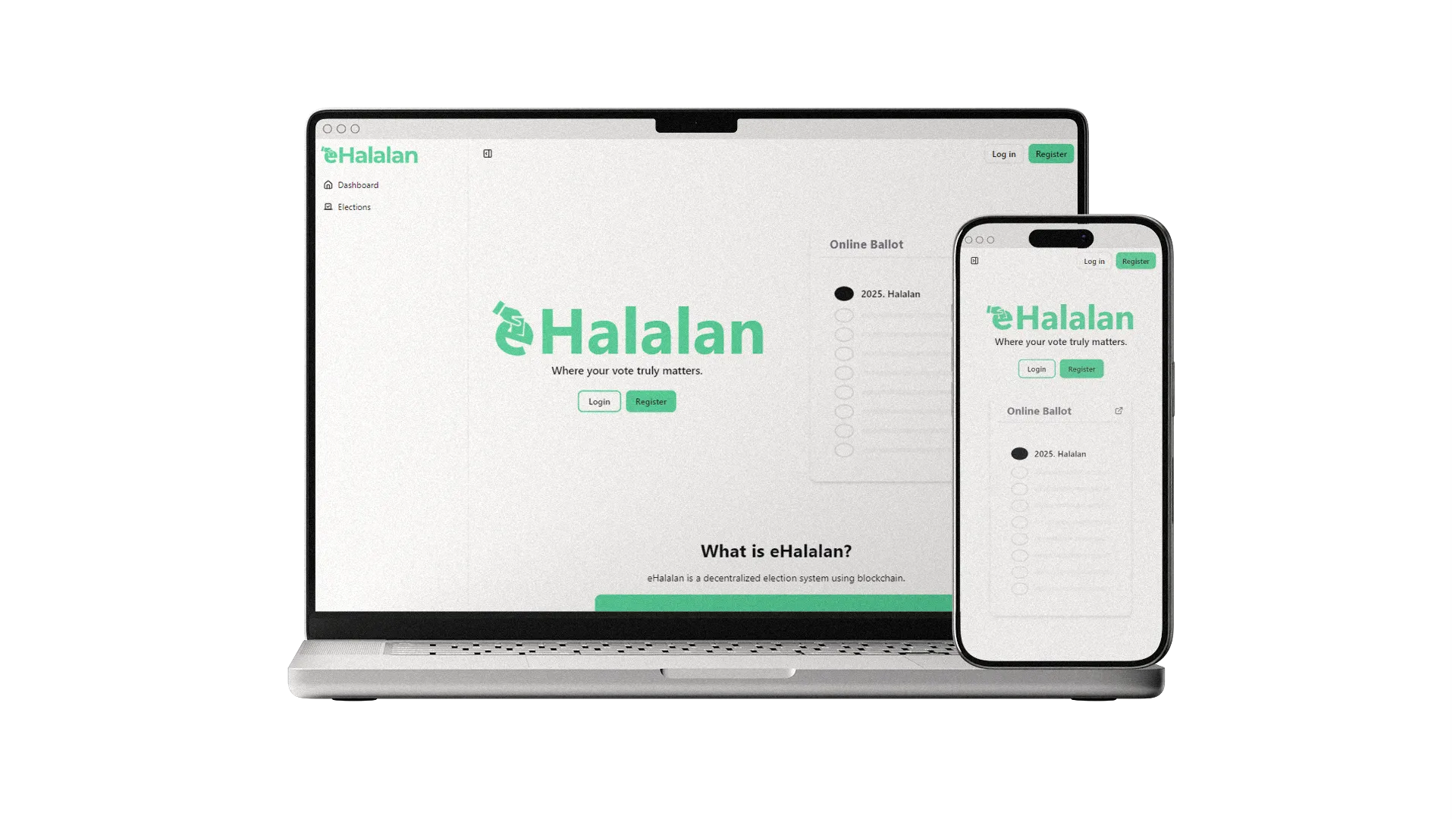
I worked across the project but spent most of my time on the frontend. Our target users weren’t crypto enthusiasts, they were ordinary Filipino voters who’d potentially be moving from paper ballots to an online system. Even if the blockchain worked perfectly underneath, none of that mattered if the interface felt confusing or intimidating. So I focused on simplifying the experience and cutting friction wherever I could.
What I learned
This project changed how I think about blockchain. Before the hackathon it mostly felt like a buzzword people attached to projects whether they needed it or not. Building with it forced me to think more critically: it’s good at solving certain trust problems, like making records publicly verifiable, but it doesn’t automatically solve everything about digital voting.
Privacy was the challenge we never fully solved. Making votes verifiable while keeping each voter anonymous is much harder than just recording transactions on a chain. Onboarding was another limitation. Requiring every voter to set up and use a MetaMask wallet is a level of complexity that would kill adoption in a real national election.
Even as a hackathon prototype, eHalalan taught me to look past the technology and ask whether it’s actually the right tool for the problem.