In past hackathons I kept starting with a technology, then finding something interesting to build with it. This time we talked to actual users first and built around a problem that already existed. For once I thought we’d done it right. Then we looked around the competition and realized we were still in a crowded space.
Finding the problem
We interviewed dorm managers and the MDRRMO of Miagao about disaster response, and one issue kept coming up: communication. Reports come from different people, through different channels, at different levels of detail, and someone still has to organize all of it before responders can use it.
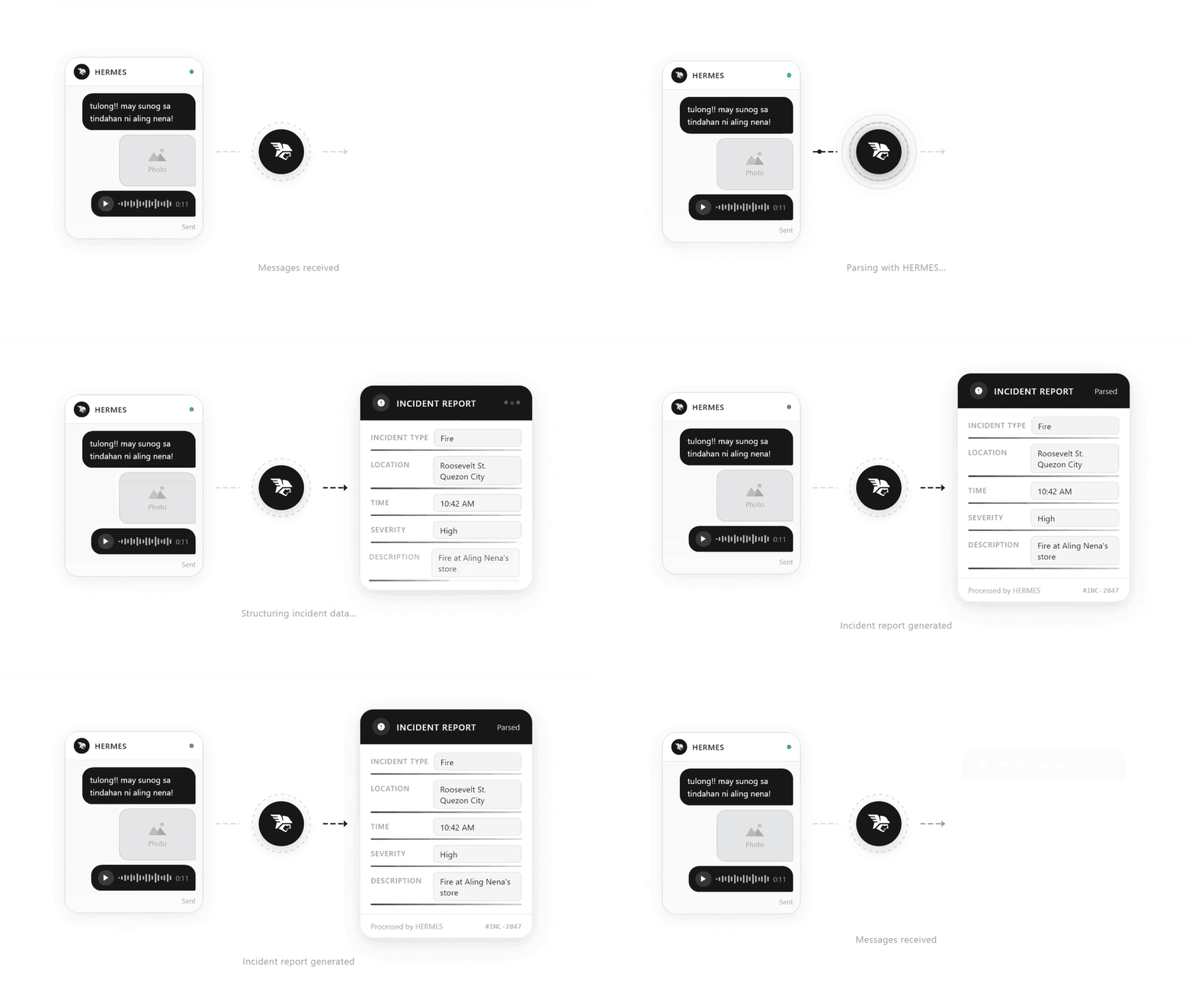
We didn’t want to build “an AI chatbot,” that was the exact trap from my previous hackathon. People already communicate through messaging platforms; the problem was those conversations were messy and hard to turn into structured incident data. So we built a DRRM communication control center that takes in reports through chat and turns them into something responders can work with.
AI is not the product
This was my first project integrating LLMs, but AI was never meant to be the selling point, especially since a wrong output here can cost lives. It handled the messy human communication, but rule-based flows held the system together. A lot of AI projects start with “where can we put an LLM?” and search for a problem afterward. I didn’t want HERMES to be one of them.
The mistake I thought I’d already learned
This hackathon was frustrating precisely because I thought I’d learned this lesson already: a shiny technology doesn’t make a shiny product, and extra features don’t fix a weak idea. We started with a real problem, talked to real users, and still ended up next to a dozen other teams building some version of a reporting system.
You spend hours convincing yourself you found a unique angle, then realize other people had the same thought. We were so focused on proving the problem was real that we didn’t push hard enough on making the solution memorable. Everyone there has a valid problem; you still need people to say “I haven’t seen this before.”
What I learned
We submitted our video and got eliminated, which stung more because this project felt more grounded than my past hackathon ideas. Learning from a mistake doesn’t mean you stop making versions of it.
I’m still glad we built it. It was my first time building an LLM-integrated system, and it taught me where AI actually belongs in software.